Autonomous processes in arable farming

Christine Marie von der Ohe
- Department: Business Development for the Agricultural Technology division
- Company: Festo
Header image ©Andela Techniek & Innovation BV
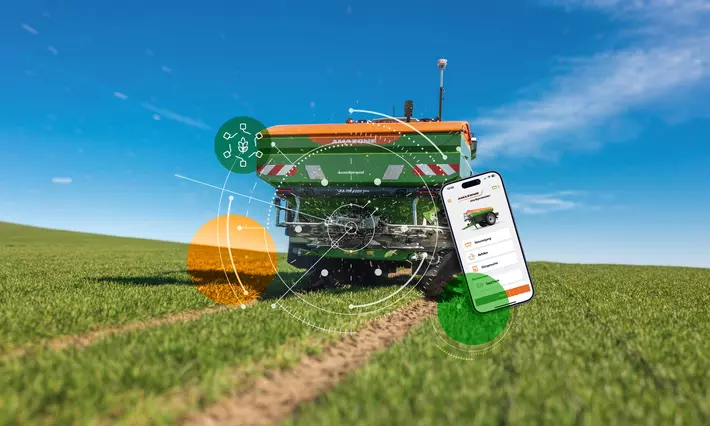
Agriculture is experiencing major and massive technology leaps forward. Electrification, digitalisation and automation are moving into the field at full force and combining efficiency with sustainability. What has matured in factory halls and consequently at the industrial field level is becoming the foundation for autonomous, selective and precisely timed processes in arable farming.
The transfer of proven applications is a central pattern here: from milking robotics where industrial motion‑components have been standard for years, hacking‑, spraying‑ and sowing robots through to solutions for selective harvesting are now being developed. Small, networked units are performing tasks independently – controlled by higher-level systems that combine sensor technology, satellite data, weather, soil conditions and digital cultivation plans.
This places the field level at the very centre of data rooms. Classic deterministic control systems are no longer sufficient: autonomy requires a tight coupling of actuators and sensors with cloud and edge intelligence, as well as end-to-end digital‑twin concepts right down to the component level. Industrial designs deliver speed and scale here, while agricultural-specific adaptations make them suitable for the field.
Today, many of the scenarios outlined still represent a visionary perspective and are not state-of-the-art across the board – but do clearly indicate the course that the industry is currently taking.
The convergence of the sectors is visible: fieldbus‑worlds are converging and growing together with Ethernet‑based standards and companion‑specifications. In the place of proprietary islands, the idea of using industrial components with targeted adaptations is gaining ground – economically fuelled by quantities and technically supported by robust, tried-and-tested assemblies and components. Meanwhile, start‑ups are accelerating this development: new agricultural robots are often developed based on industrial drives, controllers and valves – adapted accordingly to vibration, humidity, dust and chemicals.
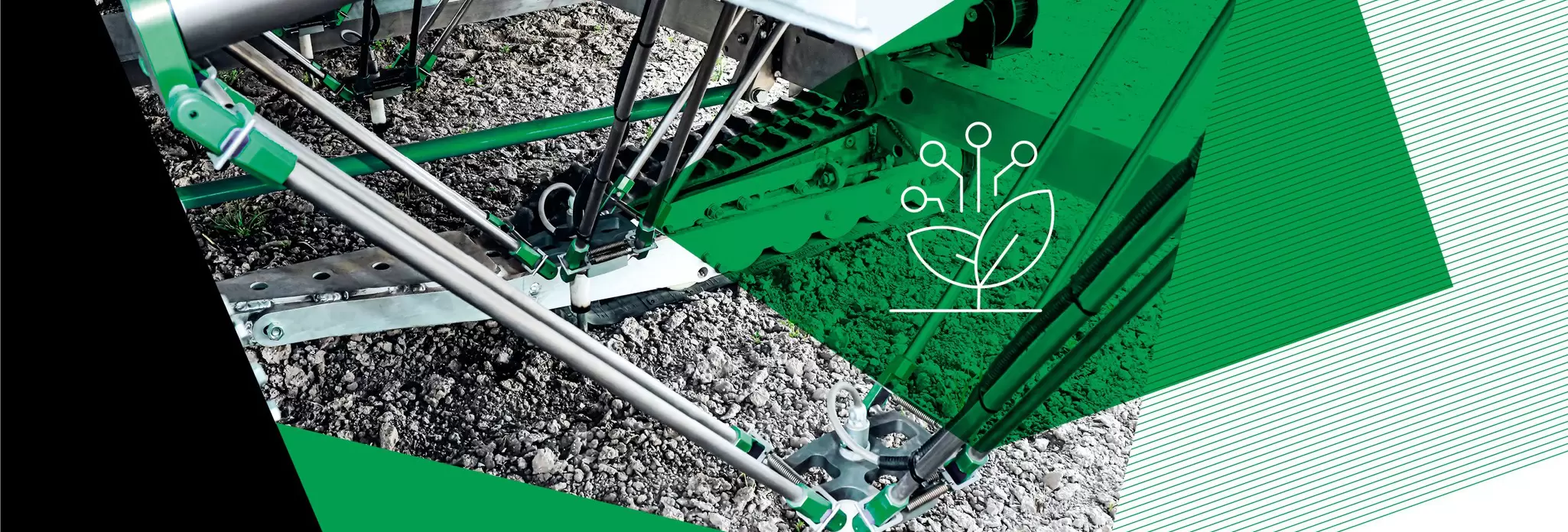
For example, precision‑spraying applications are being realised with modified valves and the appropriate connectors; pneumatic automation technology from Festo, familiar from industry, is assuming switching tasks for crop protection agents. Connectivity is the key factor here. Connectors are potentially the weakest link in the field – and at the same time the cornerstone for availability. Unlike in the factory, repairs often have to be executed directly in the field by untrained personnel. Consequently, interfaces should be designed in such a way to enable rapid, safe and intuitive replacement and installation. Suitable haptics, clear coding and robust housings are not a minor matter, but form the core of operating and spare parts concepts.
The overarching framework here is a positive technology‑narrative: Progress is expedient and serving, if it is put to consistent use. Agriculture that combines biodiversity and productivity is hardly conceivable without comprehensive electrification, digitalisation and automation. Festo, drawing on its in-depth industrial automation expertise – from motion and sensor technology to technical education – is able to support this transformation in a pragmatic manner: through components that are digitally connectable and through cooperation with OEMs that implement AI‑functions such as detection and decision-making.
The future of agricultural technology is where industrial field levels and agricultural practice meld and merge. Innovative automation components, reliable connectivity and a continuous data flow through to the cloud are paving the way for autonomous systems in the field. Making the most of this convergence will result in more resilient agriculture – in economic terms, and, not least with regard to ecological considerations and factors.
Digital Twin at Festo – data rooms right down to components
Festo consistently makes its components Digital‑Twin‑capable and actively promotes these developments within the context of the Industrial Digital Twin Association (IDTA). Standardised digital images are created for actuators, valves and sensors, which bundle technical data, functions and diagnostic information. They enable simulation, virtual commissioning and seamless integration into administration shells in accordance with the 4.0 Industry Standard.
In agricultural technology in particular, this is accelerating the integration into autonomous machines: field-ready components can be parameterised, monitored and adapted to changing conditions more rapidly. In this way, the Digital Twin is creating the foundation for precise, networked and scalable agricultural systems.