Efficient production with agent-based systems


Dr. Henning Gösling
Position: Senior Researcher specialising in agent-based production and logistics
- Company: SmartFactory-KL e. V
Building blocks of the future: The power of agent-based systems
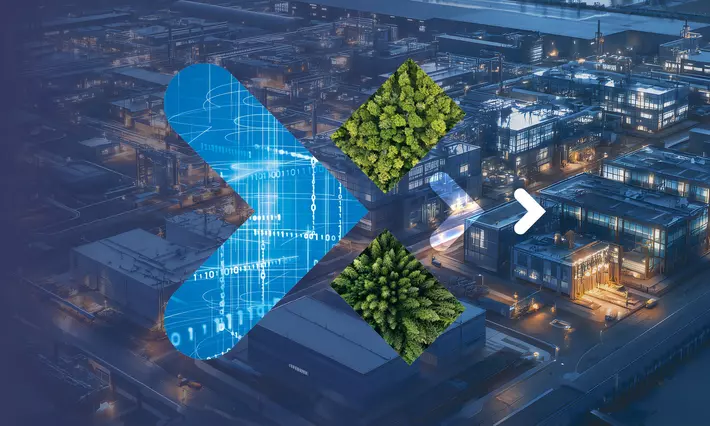
Imagine an architecture that is constantly changing – with structures that adapt flexibly and expand or contract as soon as the requirements demand such a shift. This adaptive design could symbolise the automation of the future, in which man and machine join forces and work together.
Agent-based systems play a decisive role in this collaboration. These modules represent resources and products and work like flexible building blocks. Driven by horizontal communication mechanisms, classic algorithms and artificial intelligence, they enable the dynamic processing of production orders, production capacity management and resource coordination.
SmartFactory-KL actively implements such agent-based systems in its own model factory.
Transparency and efficiency in matrix production
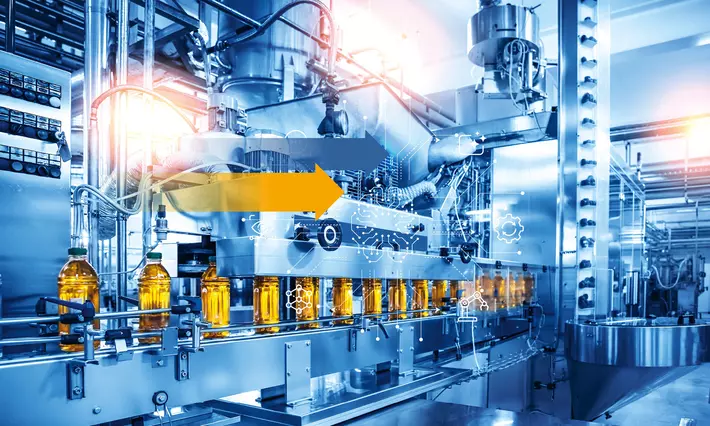
Matrix production is one salient example of the use of agent-based systems. As opposed to traditional production lines, which are characterised by rather rigid processes, matrix production provides a flexible arrangement of production resources in connection with dynamic material flows. In such a production environment, product agents are able to make ad-hoc decisions on the optimum route for an individual product based on their work plan. This dispenses with the need for extensive material flow control systems in which all possible routes for all product types must be mapped by matrix production.
Industrial agent systems are based on the ability to collect environmental information by way of sensors, communicate with each other continuously as well as analysing the incoming information and making decisions based on this input. They are able to learn independently from experience, foresee the consequences of their own actions and continuously improve their strategies. These systems also feature a modular design, which means that they can be easily customised to cater to different production environments. In production, for example, this modularity facilitates the integration of new machines and systems without the need for extensive reprogramming. Modularity also increases transparency by providing real-time data on production processes to the other agents in the system. In this way, other agents can respond directly to deviations from the given plan.
Challenges and opportunities of implementation
The successful implementation of agent-based systems, however, calls for a holistic approach. A proven approach entails forming interdisciplinary teams consisting of IT specialists, engineers and users. These teams work together to analyse processes and identify areas that can be optimised by way of agent systems. It is also advisable to develop a roadmap for the introduction that sets clearly defined goals and time frames. The continuous dialogue with technology partners also provides valuable information in this context.
Following such a structured approach ensures benefitting from clear-cut, decisive advantages: Agent-based automation offers significant flexibility and efficiency gains, positioning it as a key factor for companies that are determined to hold their own in increasingly competitive and dynamic market landscapes. These solutions take over many of the planning and control tasks that were previously carried out manually, enabling the efficient reallocation of human resources to more strategic tasks. This is particularly valuable in view of the prevailing skills shortages.
Future potential of agent systems
Agent systems are capable of optimising existing production methods. The networking of industrial systems and advancing digitalisation are opening up remarkable opportunities for the use of this technology.
In logistics, agents optimising distribution networks are also able to achieve considerable cost reductions through efficient route planning and load distribution, for example. Networks optimised in this way are not only more efficient, but can also be operated in a more environmentally friendly manner, thanks to resource savings and lower emissions. Consequently, agent-based automation opens up new horizons and offers solutions for many of the demanding challenges in modern production, logistics and beyond – as an architecture that constantly adapts to new requirements: by way of providing fewer/more agents or additional agent types for newly emerging players.
About SmartFactory-KL
The SmartFactory-KL e. V. technology initiative, based in Kaiserslautern, is a leading German research and demonstration platform for future-orientated production systems. For over 20 years, the network of science and industry has been developing practical solutions for the factory of the future, focussing on modular production architectures, digital twins, interoperability and autonomous processes. The network serves as a testing ground for new technologies and standards and demonstrates how modern automation can also be implemented in the brownfield.