Autonomy active on our fields

Stefan Kiefer
Position: Head of Crop Innovation at Amazone
Sensor technology, automation and data-based processes are fundamentally changing agricultural work in fields. Automation has already been finding its way into agricultural technology since the 1990s.
The automatic boom guidance on crop protection sprayers, is an early example, which automatically regulates the working height thanks to ultrasound. This was followed in the 2000s by automatic section control, which avoids overlaps and is now the standard in many regions. These systems noticeably reduce the driver's workload and ensure precise, reproducible work results.
With today’s digitalisation advances, entire work processes are now coming into focus. Systems such as EasyTram plan tramlines in advance using geodata. The machines themselves continue to work completely autonomously – a must, given that agricultural land often does not offer a stable grid. Consequently, all the algorithms must run on the device, which only sends status data when required.
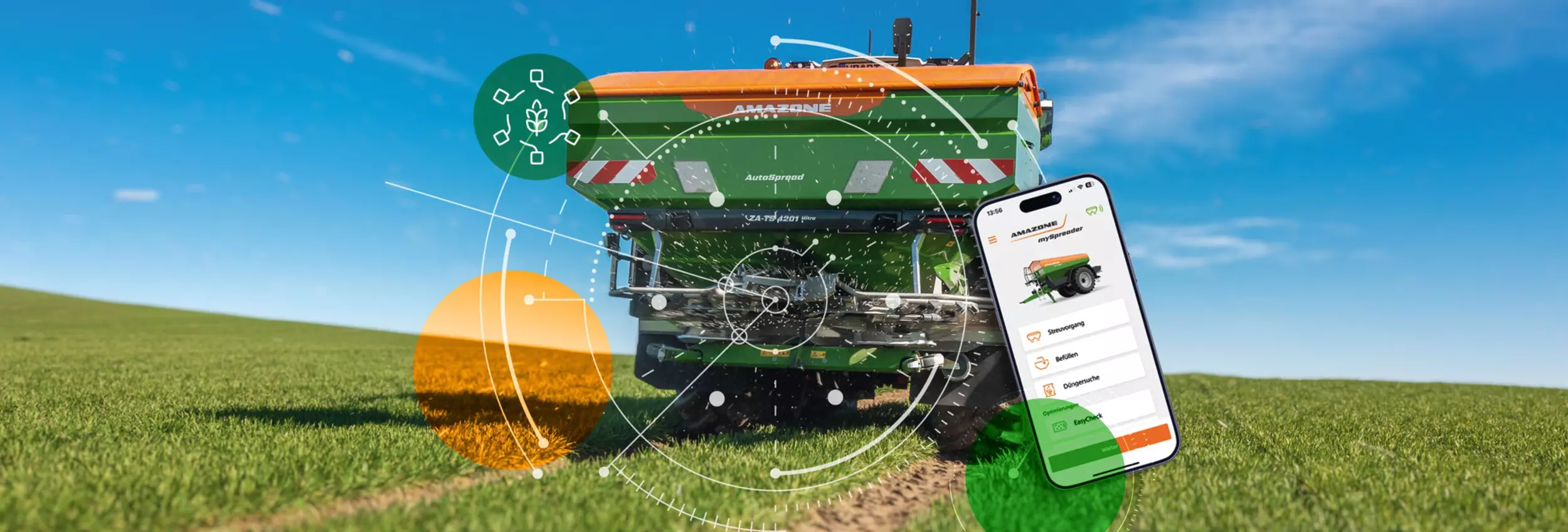
Amazone's latest generation of fertiliser spreaders represents a technology milestone.
A total of 16 radar sensors monitor the application
Seven sensors on each side detect the discharge angle in the ArgusTwin and ensure precise lateral distribution. Two additional sensors also measure the actual throwing distance and compare the trajectory of the grains with reference data in real time.
This means that the lateral and longitudinal distribution can be precisely controlled and permanently monitored for the first time. If values deviate, the system prompts the driver to carry out a spreading test. All the data flows into the cloud and enables optimisations over the entire life cycle – a paradigm shift compared to previous static setting tables.
This permanent feedback opens up new potentials
Amazone can improve algorithms, dealers receive precise diagnostic data, while even fertiliser producers benefit from feedback on the quality of their batches. In this way, the machine improves over the course of actual use – a decisive difference over conventional industrial automation, in which hardware is usually only configured once.
The direction is clear
The more closely processes are monitored and safeguarded, the closer we are approaching full autonomy. Autonomous operations are already a reality in soil cultivation. According to Stefan Kiefer, Amazone is now achieving around 99 per cent process monitoring for fertiliser spreaders. The main unanswered questions concern the safety of the surrounding area at large scattering distances of up to 72 metres. As agricultural machinery works on private land, however, different conditions apply as in road traffic.
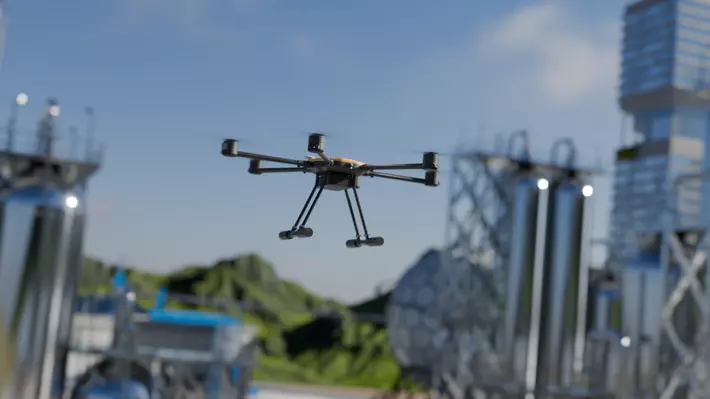
Artificial intelligence currently plays a role above all in areas where image data is processed – for example in weed detection operating with cameras or drones. Cloud computing and to an increasing extent edge‑computing processes are at work here. With regard to other functions, deterministic control technology continues to dominate, with AI‑supported further development running primarily in the background.
Agricultural technology features as one of the most dynamic innovation areas in the world of automation today. Amazone shows how mechanics, sensors and software merge – and how machines are being created that work more precisely, monitor themselves and learn with every passing season.
About Amazone
The Amazone Group ranks as one of the leading manufacturers of modern agricultural technology for soil cultivation, sowing, fertilisation and crop protection. Founded in 1883 and headquartered in Hasbergen-Gaste, the family-owned company develops machines and digital solutions for efficient, sustainable and high-precision agriculture. Amazone stands for innovation worldwide – from smart assistance systems through to networked, autonomous machines.