Autonomy becomes a principle for success
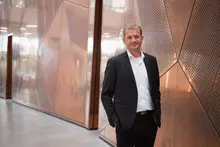
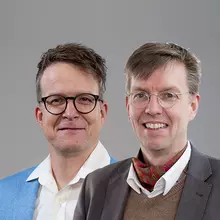
Prof. Kasper Hallenborg
- Company: University of Southern Denmark
Production environments are changing faster than traditional automation can respond. In an interview with tec.news, Prof. Kasper Hallenborg, Director and Head of the Faculty of Engineering at the Maersk Mc-Kinney Moller Institute, describes how software-driven robotics, digital twins and decentralised intelligence are opening up new scope for action – and why automation is currently being fundamentally rethought.
tec.news: Mr Hallenborg, how do you define automation?
Hallenborg: Automation means that software or hardware takes over tasks that were previously performed by humans. For a long time, this was limited to deterministic, hard-wired systems. Today, digitalisation, sensor technology and AI are radically changing the possibilities.
tec.news: In what way?
Hallenborg: In the past, robots had to be programmed entirely on the hardware side – slow, inflexible and hardly capable of real-time operation. Today, we simulate entire production processes in advance, use digital twins, synthetic training data and more and more sensor technology. This allows robots to be controlled dynamically and react to situations. This opens up new opportunities, especially for countries with many SMEs: even low-volume, high-mix production can be automated.
tec.news: How does this affect the all-electric society?
Hallenborg: Electrification and digitalisation reinforce each other. The more products can be digitally recorded, the more intelligence can be added on the software side. Data-driven systems enable functions that previously had to be solved mechanically. And autonomy is becoming more important – in order to conserve resources, cushion the shortage of skilled workers and implement more sustainable production models.
tec.news: What is your approach to automation in the future?
Hallenborg: One core component is the digital twin, which connects design, simulation and operation. This enables us to automatically manufacture even very large structures – such as components for wind turbines or maritime applications. We are currently developing the world's largest robotics cell for single-item production. Another focus is automated disassembly to improve recycling processes. Many products today are not designed for this; we are researching "design for disassembly" and robot-assisted processes.
tec.news: What role does AI play in this?
Hallenborg: AI and multi-agent systems open up new degrees of freedom. Classic automation enforces rigid processes; any deviation leads to problems. Agents, on the other hand, observe their environment, make decisions locally and adapt. This is similar to the trend in organisations: greater autonomy increases flexibility and overall performance. Such decentralised architectures will be crucial in production. Part of the responsibility shifts to the production environment, and employees gain more autonomy.
tec.news: Does that mean we need a new term – away from classic automation?
Hallenborg: You can still call it automation, but in the future, systems will become more autonomous, more dynamic, more intelligent. The decisive factor is the philosophy: away from centralised control, towards distributed, adaptive systems.
Automation means making processes independent through technology. The key is to no longer view it as a rigid, purely deterministic system. In the context of digitalisation, we need to rethink automation – with more autonomy, adaptability and more intelligent, flexible systems
tec.news: Are there any links to connectivity?
Hallenborg: Absolutely. Digital twins only work if physical components also provide data. Intelligent, sensor-equipped connectors would be a logical step. They could record states decentrally, abstract them and process them in edge logic. This increases robustness and supports precisely the distributed autonomy we are talking about.
"Design for Disassembly"
Automated disassembly is becoming the key to reuse, repair and recycling. What is currently limited by high manual costs will become scalable and economical in the future thanks to robotics. This requires modular product design: components connected via plug connectors can be efficiently assembled and separated in a targeted manner. Defined interfaces enable robot-assisted disassembly, sorting and reuse.
Plug connectors connect during operation – and enable efficient separation during repair and recycling.