From regulations to autonomy

Constantin Liepert
- Department: Siemens Digital Industries Software
- Company: Siemens
Automation has ranked as a central component of industrial value creation for decades. But roles are changing fundamentally. Instead of purely rule-based processes, the focus today is on integrated, data-driven processes – a development that Siemens is consistently driving forward with the "Siemens Xcelerator" approach.
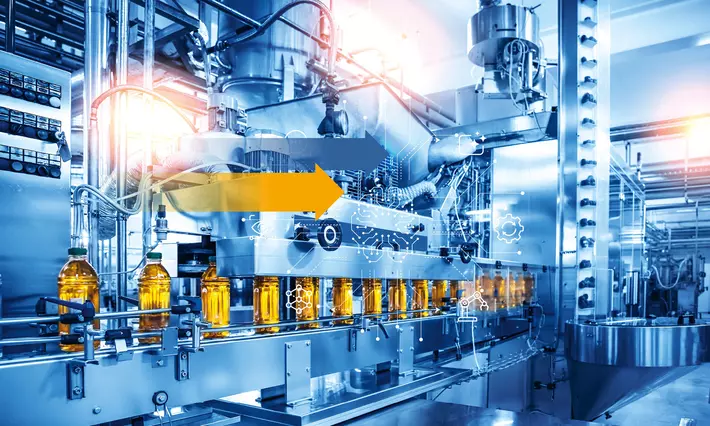
Traditionally, automation has been understood to be rule-based logic. But modern industrial processes are far more complex: Efficiency, quality and speed can only be increased if IT and OT interact and operate seamlessly. It is precisely this connection that forms the core of the Siemens Xcelerator, combining automation and software solutions in a comprehensive portfolio, open ecosystem as well as a marketplace. In this way, automation is defined more broadly – all the way to autonomisation, i.e. processes that support data-based decisions or make decisions themselves assisted by artificial intelligence (AI).
Process and data consistency are playing key roles here.
With the "Digital Thread", Siemens is creating a consistent database along the entire product life cycle. Requirements, CAD‑models, simulations, parts lists, production data and service information are interlinked at this point and form an integrated system landscape. Media discontinuities are avoided, changes are evaluated more quickly and parts lists are synchronised automatically. Consistent workflows make it possible for adjustments in engineering to have an immediate impact on planning, production or service. This data consistency is crucial for AI‑supported applications, as only fully networked engineering‑and production data will enable robust analyses and genuine process optimisation.
In the Siemens Xcelerator, End‑to‑End‑processes become reality.
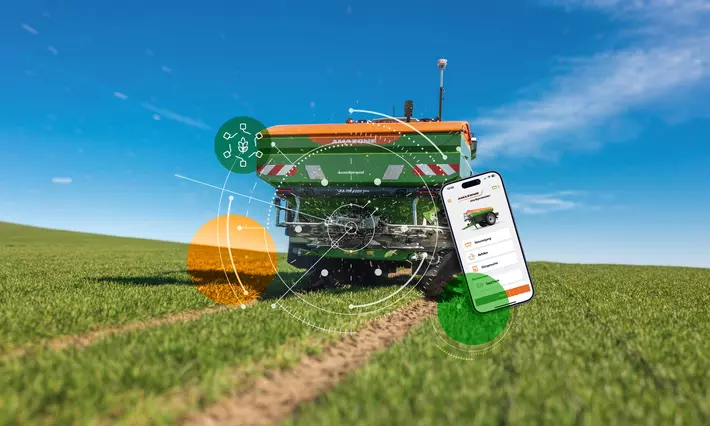
The Siemens Xcelerator portfolio covers all phases of the value chain – from early requirements and system design through to production and subsequent operation. Supplemented by industrial edge devices and IoT‑solutions, a seamless connection is created between the field level and the cloud. New control systems are edge‑capable, and brownfield‑systems can be integrated via gateways and open interfaces. This means that IoT does not become a parallel world, but far more an integral part of industrial automation.
The emerging "Industrial Foundation Model" from Siemens is another pioneering step, which understands the language of industry and is capable of processing industrial data such as CAD‑geometries, simulation results or parts lists. This enables AI‑models to factor in and understand complex technical relationships for the first time – an important building block on the way to autonomous engineering and production processes.
A first example from the electromechanical industry shows just to what extent this approach is capable of changing industry: When developing connectors, users can now enter requirements based on text or voice. AI automatically checks whether an existing product is suitable or whether a new design needs to be generated. In combination with Rulestream and Designcenter NX, complete CAD‑models are automatically created to suit the respective application. Further simulations using the Siemens Simcenter simulation portfolio, take materials, ambient temperatures and other factors into account in order to ensure the functionality of the design. This significantly speeds up a process that used to require a great deal of manual coordination. Here, it is readily evident how automation, data consistency and industrial AI merge and work together: from demands and requirements, the call up and on to the finished product.
This closes the circle in terms of conventional connection technology: end-to-end data, integrated workflows and AI‑supported automation also result in significant efficiency gains in the development and production of connectors. The technologies of the