Country flagChina Mainland

Industrial Connectors Circular Connectors System Cabling PCB Connectors
PEOPLE. POWER. PARTNERSHIP. Jobs.HARTING.com Your Contact Persons

Industrial connectors / Han®


Overview
Rectangular connectors
Industrial circular connectors
Connectors & cable assemblies for specific applications

Circular connectors


Overview
Metric circular connectors
Industrial circular connectors

Device connectivity


Overview
PCB connectors
PCB connectors
Panel feed throughs
Panel feed throughs
Cable connectors and cable assemblies

Industrial Ethernet Switches


Overview
Industrial Ethernet Switches

Operator interfaces


Overview
Operator interfaces
Operator interfaces

Charging equipment for Electromobility


Overview
Charging equipment for Electromobility

Tools


Overview
Tools
Tools

Cable assemblies & bulk cables


Overview
Power and signal
Power and signal
Data
Data
Bulk cables
Bulk cables

Industries


Railway
Railway Overview
Automation
Automation - Hero Image
Energy
HARTING connectors inside a wind turbine
Machine Building
Machinery
Robotics
Robotics Overview
E-Mobility Technologies
AES sector graphic MOBILITY
Data Centres
Data Centers Website Touchpoint Graphic - 1200 x 628.jpg
Semiconductor Manufacturing
SemiconductorManufacturing_Overview.tif
Agriculture Technologies
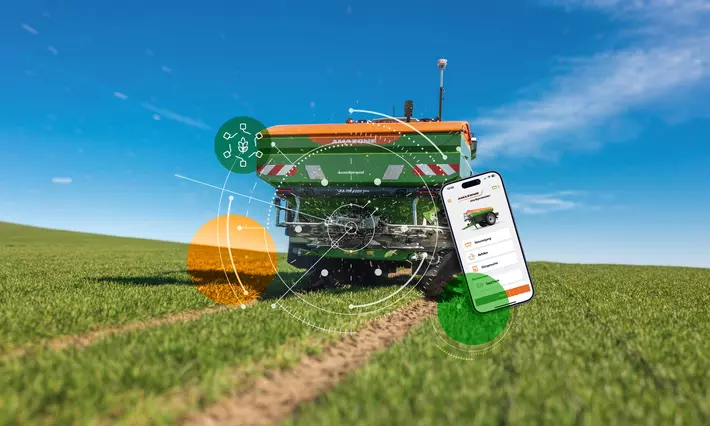
Industry - Agriculture Technologies Overview
Hydrogen Technologies
Hydrogen Ecosystem Overview

Solutions


Customised Solutions
HARTING customised solution
Circular connectors cable assemblies
Cable assemblies circular connectors
Industrial Ethernet solutions
Field wireable connectors
Field installation
Single Pair Ethernet
Cable Connectors Cable Assemblies Data connectors Single Pair Ethernet
D-Sub PushPull
D-Sub PushPull connect
Solenoid systems
Solenoid systems
MID Solutions
MID Solutions

The Technology Group


Technology Group
HQT Building, Espelkamp
History
The Future needs the Past
Board
A family-run company
Partnerships
Partnerships
Sporting Commitment
Our Sporting Commitment

HARTING in China


HARTING in China
HARTING China.jpg
HARTING China Awards
Web seminars held in China
Web-seminars held in China
Exhibitions held in Southeast Asia
Exhibitions held in China
HARTING China's social media
China's Solution Highlights

Newsroom


News
News room
Press & media contacts
Contact for journalists
Technology magazine tec.news
tec.news issues 45 - 49

Sustainability


Our Responsibility
Our Responsibility
Our Corporate Culture
Our Environment
Our environment
Our Technologies
Our technologies
Our Social Commitment
Whistleblower System
Protect by Seeing and Acting - BKMS Whistleblower System
Download Certificates - Integrated Management System
CSR Certificates

Quality


Integrated Management System
2024-05_GettyImages-1214111373_man woman talk tablet.jpg
Our quality claim
HQT Building, Espelkamp
Testing and Laboratories
Material analysis
Our Social Commitment
Our Environment
Our environment
Download Certificates - Integrated Management System
CSR Certificates

Support & Services


Engineering Data & Services
Configurators
Configurator Image person in front of Desktop with Han configuration
Website Training Center
More about Digital Twin
Digital Twin Image
Technical support
Customer Support - Front of HARTING plant 1 HQT
myHARTING
Website Advanced Stage
Newsletter subscription
newlsetter confirmation
Business Consulting
2024-06_business_navigator_GettyImages-1274389570.jpg

Downloads


Download Documents
Downloads
Download Manager (Download Product Data)
Download Product Data
Download Certificates - Integrated Management System
CSR Certificates
Download Declarations - Product Compliance
CSR Certificates

Buy Products


Direct order via myHARTING
Find Distributors
Customer Support - Front of HARTING plant 1 HQT
Digital Procurement (EDI, OCI, WebService)

Partner Management


Supplier Portal
Supplier Portal
General supplier information
Handshake

Contact


HARTING in China
HARTING China.jpg
HARTING Worldwide
HARTING Worldwide - Flags

Alternatives:

Search by series
Configurators
  1. Home
  2. News
  3. Cross-sectional technology for the All Electric Society
tec.news
19 April 2026
3 minutes

Cross-sectional technology for the All Electric Society


Drawing on standardised interfaces, digital modelling and intelligent connectivity, universal, skill-based, AI-supported automation is not just a vision.
Cross-sectional technology for the All Electric Society
Pascal Rübel

Pascal Rübel

Position: Project Manager Factory X, Smart Factory KL

Automation means that technical systems perform tasks independently – especially rule-based, repetitive tasks that necessitate precision. This basic definition will remain valid in the future, while the requirements made by an All Electric Society (AES) are changing rapidly.

Automation in the AES


In the AES, where all sectors are electrified and networked, automation is central to efficient energy and data flows. Only automated processes enable energy to be controlled across all sectors: an electric car charges when renewable energy is available; a machine adapts its operation to the current supply.

Data plays a key role here. Forecasts for energy generation and utilisation serve to optimise process planning – from households to industry. When is the best time for the dishwasher to run? When should energy-intensive production steps take place? Such decisions are based on automated data analyses.

Example of the use of the digital twin


In a production line, the digital twin of a milling machine recognises that a subsequent machining step is temporarily blocked due to a tool change. Instead of stopping the entire line, the system draws on flexible skills: other machines automatically check whether they can take over the next production step. A suitable machine reports back capability and availability – and the process continues without interruption. In this way, the digital twin enables genuine, flexible and reconfigurable automation.

The biggest challenge: Flexibility


Conventional automation is designed for long, stable processes. Today, however, solutions are required for small batch sizes or frequent product changes – right down to batch size 1. The aim is to significantly reduce the effort required for customisation.

At the same time, programming is undergoing shifts and changes. While PLC programming still dominates in the industrial arena, high-level languages are taught at universities. High-level languages are modern programming languages featuring a higher level of abstraction. They are easier to read, object-orientated and enable faster, more flexible development than traditional PLC‑languages. Consequently, safety and real-time critical functions should remain on the PLC, while other tasks can be outsourced to high-level languages.

This separation not only facilitates the integration of new skilled employees, but also supports sector coupling. Standardised interfaces and high-level language-based functions can be used across all sectors.

Skill based architecture


The skill‑based architecture is a central component of this new automation world. A skill describes a clearly defined ability of an asset – for example, "drill hole", "grip component" or "start heat generation". Each machine encapsulates its skills in a standardised form and makes them available to the digital twin.

Key advantages:

  • Skills make assets interchangeable – regardless of the manufacturer.

  • Automation logic can be flexibly reconfigured.

  • Machines can decide for themselves whether they are able to perform a task – or pass it on to another asset.

In this way, skill‑based architectures form the backbone of highly flexible, networked automation.

Why AI reliability is a critical factor


Many components for modern automation already exist: image processing, multi-agent systems, automated control systems. But reliability remains the key challenge - especially for AI‑systems.

As opposed to consumer‑applications, 85 % accuracy is totally unacceptable in industrial processes. An incorrectly classified component, faulty recognition or a probabilistic decision can incur production downtimes, quality losses or safety risks.

Reliability therefore entails

  • Stable AI‑Models with traceable decisions,

  • Valid and complete training data,

  • Certifiability with regard to standards, safety‑requirements and liability regulations.

AI can do a lot today – but safe, verifiable reliability in complex production environments has not been fully achieved to date.

The vision of a fully skill‑based, AI‑supported, universal automation landscape will not materialise in the span of 3 to 5 years, but rather within a period of some 10 to 15 years. This time horizon is realistic in order to establish standards, certifications, data quality, industrial adoption and technology integration.

Along with advancing electrification, the significance of connectivity is also on the rise. Connectors secure the power supply and data transfer – and become intelligent interfaces that can be used to record energy consumption, for example. If a connector fails, the system comes to a standstill. Their role as the backbone of modern automation will certainly continue to grow.

Summary


Automation remains the right term – but calls for advanced, leading-edge technologies and not the solutions from the past. The future of automation lies in flexibility, data expertise, reliability, skill‑based architecture and universal connectivity – and represents the central cross-sectional technology of the All Electric Society.

About SmartFactory-KL


The SmartFactory-KL e. V. technology initiative, based in Kaiserslautern, is a leading German research and demonstration platform for future-orientated production systems. For over 20 years, the network of science and industry has been developing practical solutions for the factory of the future, focussing on modular production architectures, digital twins, interoperability and autonomous processes. The network serves as a testing ground for new technologies and standards and demonstrates how modern automation can also be implemented in the brownfield.


More about smartFactory-KL


Martin Ruskowski - A look into the future of industrial intelligence

Simon Jungbluth: The architecture redefining automation

Henning Gösling: Efficient production with agent-based systems

Discover all articles of tec.news issue 50
tec.news editorial team

tec.news editorial team

  • Company: HARTING Stiftung & Co. KG
[email protected]

Related news


harting-web-2500x1500px-0084-Perinet-20260227.jpg
19 April 2026 tec.news

Efficient data communication with Single Pair Ethernet

Experience how Single Pair Ethernet and intelligent sensor technology are revolutionising automation. Perinet enables direct data transmission from sensors through to IT levels – for efficient, future-proof production processes.
read more
green background with blue and green hexagons
19 April 2026 tec.news

Efficient production with agent-based systems

Agent-based systems are revolutionising industrial production: they enable flexible matrix production, raise efficiency and transparency and adapt dynamically to new requirements.
read more
tn50-SmartFactory-Jungbluth-20260304.tif
19 April 2026 tec.news

The architecture redefining automation

Experience how modern automation featuring smart architectures and agents can make your production more flexible, efficient and future-proof. Discover the synergy between man and machine!
read more

HARTING Newsletter

Social Media

Country flagChina Mainland

© HARTING Technology Group | HARTING (Zhuhai) Manufacturing Co., Ltd. Room 201, No.19 Chuangxin Si Road, Zhuhai City Tel: 86 40 01761166 Shanghai branch Room 3501-3510 Grand Gateway 1, NO.1 Hong Qiao Road, Shanghai Tel:86 21 34189758

  • Imprint
  • Privacy Policy
  • Cookie Policy
  • Privacy Policy (Umeng+)
  • Terms of Use
  • Customer Information
  • 粤ICP备19078745号-1
  • 粤公网安备 44049102496590