Digital twin: The foundation for seamless end-to-end value creation

Andreas Wedel
Position: Director Digitalisation, Data & AI
- Department: Competence Center Digital Transformation
- Company: HARTING Technology Group
Electrification is now taken for granted and forms the foundation of modern industrial applications. The focus is increasingly shifting to the question as to how this foundation can be designed efficiently – with one topic in particular taking centre stage: the digital twin.
The convergence of energy and data
The clear distinction between power supply and data transmission is being increasingly relegated to the past. Modern applications combine both levels in integrated systems. In this way, electrification is becoming an implicit given and a fundamental prerequisite for digital processes.
Digitalisation as essential precondition
At the same time, one thing is clear: Without digitalisation, electrification can no longer be implemented in a sustainable manner today. Digital twins, standardised data models and digital product passports are essential for the efficient planning, documentation and traceable long-term operation of electrical systems.
This is particularly crucial in the industrial arena: Planning, implementation and operation often take place in separate physical and organisational settings.
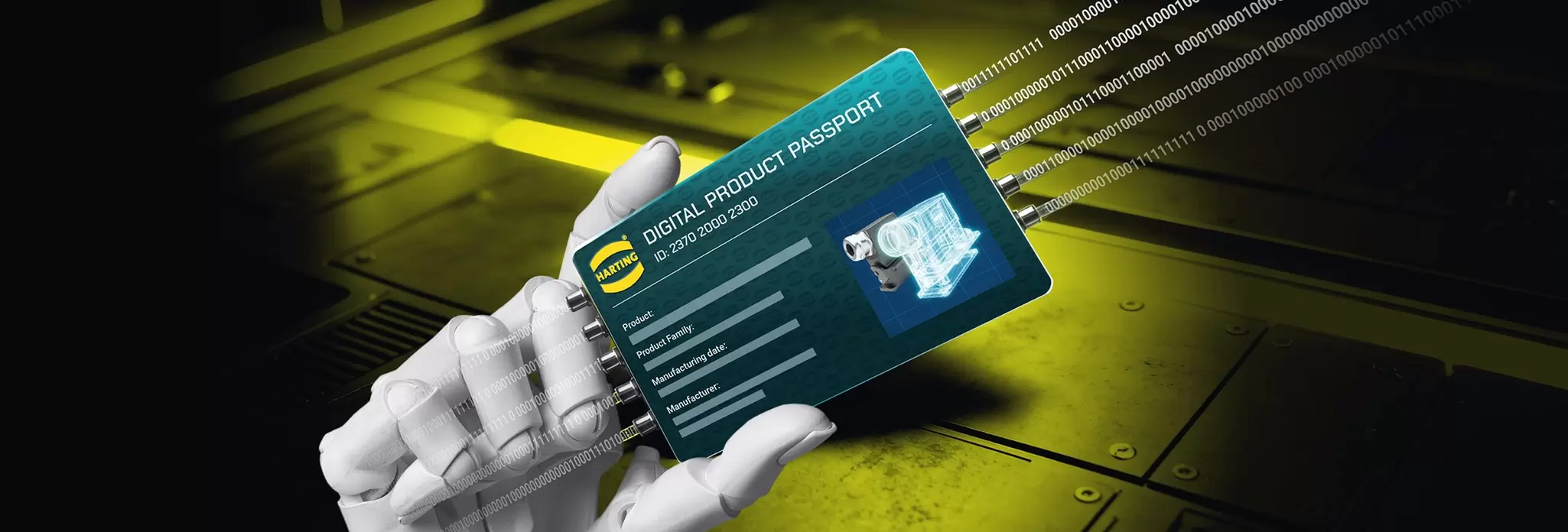
The digital product passport creates a shared database covering the entire life cycle.
The product passport as a data anchor
The digital product passport serves as a structured repository of information for components and systems. It provides machine-readable data that can be readily integrated into engineering tools, platforms and applications.
This positions it as a key component for:
end-to-end processes
workflows that can be automated
consistent data availability
Automation and AI as driving forces
Automation and AI as driving forces
As digitalisation advances, working practices and routines in engineering are also undergoing change. In future, systems will autonomously generate suggestions for components based on existing data. This process not only incorporates information from the digital product passport, but also contextual knowledge about processes, applications and regulatory requirements – as encountered in different countries, for example.
Manual examination is being replaced by automated processes:
Analysing requirements
Linking product and application data
Taking regulatory requirements into account
Suggesting suitable products
The digital product passport provides the necessary structured information for this and serves as the central knowledge base for data-driven and AI-supported engineering processes.
Always-on and new requirements
At the same time, the demands placed on the availability of data and systems are trending upwards. Globally networked applications, simulations and AI-supported processes all require access to up-to-date information at all times.
Consequently, product data must also be available “always on”, not only for people but increasingly for automated systems as well.
Outlook
The technological foundations have already been put down. The first applications are now available, particularly in the engineering sector. Over the next three to five years, AI-assisted product selection and data-driven processes are likely to become widely established across the board.
The digital product passport is evolving from a “nice-to-have” to a key enabler – acting as a link between the physical and digital worlds.
In spite of all the ongoing automation, people remain a crucial factor. Although the digital product passport is designed for automated processing, human experience, specialist knowledge and judgement cannot be fully automated. Consequently, HARTING provides information in both human-readable and machine-readable formats and uses its digital tools to combine the strengths of humans and machines.