Networked energy systems: Rethinking electrification

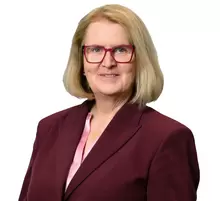
Prof. Dr.-Ing. Eva Schwenzfeier-Hellkamp
Position: Professor
- Department: Bielefeld University of Applied Sciences
More than just technology: Electrification in the context of interconnected energy systems
At the start of my career, I saw electrification as an individual, single problem that could be solved through technical means. Today, I perceive it as part of a comprehensive transformation of energy systems that merges and melds technical, economic and social aspects.
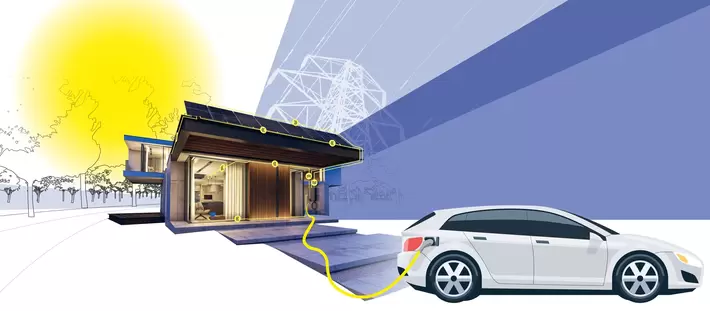
Electrification will only unleash and realise its full potential when combined with heat supply, energy storage and digital and automated control systems. Accordingly, a systemic approach is what is called for.
The interplay between electrification, digitalisation and automation
Electrification, digitalisation and automation are the key building blocks of modern energy systems. Electrification provides the physical foundation, digitalisation renders conditions and processes transparent, while automation enables them to be controlled in a targeted manner.
However, not every form of digitalisation is appropriate and expedient. It is crucial to limit data-driven processes to what is technically and economically necessary, in order to avoid unnecessary complexity arising.
“Always-on” as a new demand made on energy systems
A significant shift is evident in energy consumption patterns. Systems are increasingly operating continuously and must therefore function reliably at all times. Consequently, the energy supply becomes a permanent background function.
This development gives rise to increased demands on:
Reliability
Resilience
Continuous operability
Energy infrastructures must remain stable and responsive – also under variable conditions.
A focus on the life cycle rather than operational optimisation
For me, taking a holistic view of the entire life cycle of technical systems is key. In addition to operation, the phases of use, maintenance, adaptation and decommissioning must also be taken into account right from the development stage.
This gives rise to clear requirements: Systems should be modular in design, repairable and expandable. Interchangeable components extend service life and facilitate technical developments. At the same time, the recycling of materials is becoming increasingly significant in the context of the circular economy. This not only promotes sustainability but also reduces dependencies within global supply chains.
The integration of new technologies into existing infrastructures
The transformation of energy systems is taking place predominantly in existing buildings. Existing facilities and networks must be modernised incrementally, in stages without disrupting day-to-day operations.
Different stages of technological development call for flexible integration strategies. In addition, organisational changes are needed, such as greater agility and stronger interdisciplinary collaboration.
Standardisation as a prerequisite for scalability
I perceive considerable scope for improvement, particularly when it comes to interfaces and connectivity. The high degree of variability makes integration, maintenance and further developments all the more difficult.
Greater standardisation can reduce complexity and promote cross-organisational solutions. Cooperation can be particularly beneficial when it comes to material cycles and recycling concepts.
Actual needs come before technology
Technical excellence alone does not determine the success of a solution. Systems must meet specific requirements and take actual needs into account.
Too many features or a premature market launch can undermine acceptance and cost-efficiency, which is why it is essential to focus consistently on application scenarios and future requirements.
Timeframes for implementation
Implementation will take place incrementally, in stages. Initial solutions are already emerging, but widespread systemic scaling is expected in the medium to long term. Key drivers include regulatory requirements, ever rising demands for resource efficiency and increasing pressure to ensure sustainability.
Summary
Electrification is now a systemic challenge. What matters here is not the maximum of technological capabilities, but robust, adaptable and resource-efficient integrated overall systems.
Prof. Dr.-Ing. Eva Schwenzfeier-Hellkamp
Prof. Dr.-Ing. Eva Schwenzfeier-Hellkamp is a professor at Bielefeld University of Applied Sciences and heads up the Renewable Energy degree programme as well as the Institute for Technical Energy Systems (ITES). She is a professor at the NRW Doctoral College and is authorised to supervise doctoral students. In addition, she is involved in various advisory boards and committees, including the City of Bielefeld’s Climate Advisory Board and the Association of German Engineers (VDI). Her specialist background is in electrical engineering.