Always On the Smart Way: Smart energy management
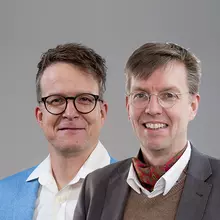
Dr Hans Krattenmacher
- Company: SEW-EURODRIVE
Managing Director Corporate Innovation Mechatronics
Whether it’s battery storage or local buffers: When large volumes of electrical energy need to be transmitted, stored and retrieved within the shortest possible time, absolutely reliable and compact connection technology is mission critically essential. As we have seen, the demands placed on such interfaces are trending upwards rapidly. Secure connections, however, are only the first step. When we look directly into the production halls, the crucial question is: How can machines with extreme peak loads be integrated into existing factories without exceeding the specified grid connection capacity?
Against this backdrop, we spoke to Dr Hans Krattenmacher, Managing Director of Corporate Innovation Mechatronics at SEW-EURODRIVE, about the fascination of Maxwell’s equations, the need for local energy storage within machines, and the question as to why an unreflected “Always On” approach in industry is decidedly not intelligent enough.
tec.news: Dr Krattenmacher, in the cult series Catweazle from the 1970s, a medieval magician regards electricity as magic and calls it “Elec-trickery”. When we look at modern machines today: What role does this “magic” play in your professional life today?
Dr Hans Krattenmacher: As an electrical engineer, this question is quite easy for me to answer: I studied electrical engineering out of genuine conviction. To me, electrical energy is one of the most versatile forms of energy that exists. They can be converted into mechanical energy, used for communication, or incorporated into electronic circuits. To many people, it may still seem like a form of black magic, but for me, its fascination lies in the elegance of Maxwell’s equations. Although I’ve been working at SEW-EURODRIVE for 26 years now, I still remember a T-shirt from my student days very well. It read: “And God said …”, alongside which were the Maxwell equations, and below them it read: “… and there was light.” That sums up my view of electrical engineering very aptly.
tec.news: Has your understanding of electrification changed significantly over the more than 25 years you have now been with SEW-EURODRIVE?
Dr Hans Krattenmacher: Perhaps less than one might expect. If, like me, you grew up with electrical engineering, the vision of an electrified world was already part of your university studies. It is more the perspective on implementation that has changed meanwhile: In the past, electrification was a technical objective, while today, thanks to renewable energy, it is the key to genuine sustainability and independence. My fundamental conviction has therefore remained the same: As soon as we are able to generate and store electricity sustainably, it will be superior to any other form of energy thanks to its tremendous efficiency. An internal combustion engine loses an incredible amount of energy before any mechanical power actually reaches the shaft, whereas electricity, on the other hand, can be converted with virtually no loss.
tec.news: That is the physical aspect. But if we look beyond the narrow confines of energy supply alone: What does consistent and comprehensive electrification mean for our society?
Dr Hans Krattenmacher: Here, we are dealing with the issue of sovereignty. For me, comprehensive electrification means independence. If we generate renewable energy locally, we as a society will become independent of resources from geopolitically sensitive regions. We are electrifying transport, industry and shipping not only because it is cleaner, but also because the energy supply forms the foundation of our entire economic structure. Controlling the energy supply means controlling a society’s capability to act. We certainly won’t be able to replace everything with electricity, but we will be able to replace a great deal.
tec.news: If we look at the second major megatrend: Is digitalisation even possible without concurrent electrification?
Dr Hans Krattenmacher: No, because digitalisation requires electrical energy. Just think of networks and data centres. When we factor in artificial intelligence, the connection becomes even clearer: The energy requirements of the major AI providers are massive; we are talking about figures on the scale of entire power stations. The benefits of digitalisation will only be realised in the long term if the necessary energy is also generated sustainably and we use it smartly and efficiently.
tec.news: The All-Electric Society is often described in terms of the triad of electrification, digitalisation and automation. We’ve already talked about the first two, so how do you see automation, as the third building block, fitting into this picture?
Dr Hans Krattenmacher: Automation is ultimately powered by electricity. For us, as a manufacturer of gear motors, this is naturally a key consideration. To put it somewhat casually: This industrial form of electrification is our bread and butter, for electrical energy is the lifeblood of automation. I need this energy to control actuators, read sensor data and run digital services. Without electricity, automation is simply impossible. When designing a system, I need to know straight away how I can efficiently supply and control the energy required for the system. It is only through digitalisation that we can achieve the intelligence required for this kind of management. That is why, for me, these three concepts are not separate developments, but rather form an inseparable whole.
tec.news: In industry today the “Always On” concept is often bandied about: Plants must no longer be shut down. What does this mean for you from a technical point of view?
Dr Hans Krattenmacher: In factory automation, we always have been “always on” so to speak, at the 24-volt level. But I take a far more differentiated view on this issue. I don’t think it makes sense to leave everything switched on all the time as a matter of principle. My philosophy is: Only keep on what is actually necessary. So I leave switched on precisely what I need to be able to restart a machine or cell in a controlled manner within the desired time frame. If you consistently leave everything set to “always on”, you’ll often be surprised at just how high the standby losses are in a factory where production does not happen to be ongoing.
Simply leaving everything switched on isn’t clever enough. Instead, we should talk about a “Smart Always On”.
tec.news: How exactly is SEW-EURODRIVE addressing these rising demands for intelligent energy management in actual concrete terms?
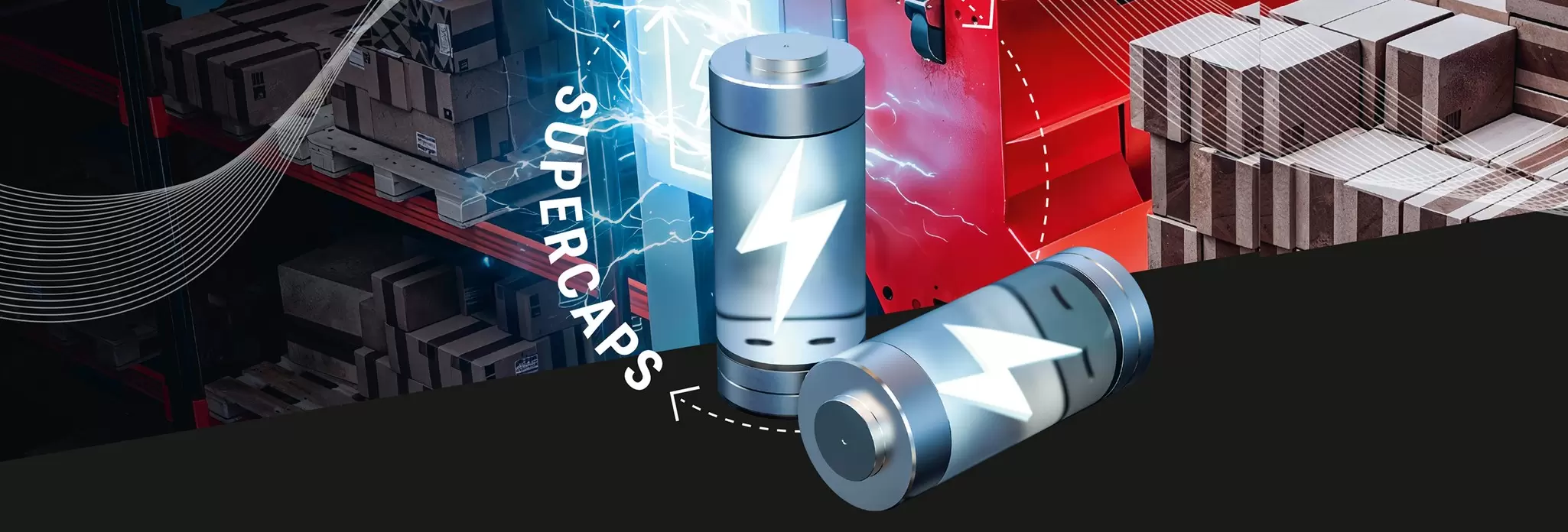
Dr Hans Krattenmacher: We manufacture electric motors, gearboxes and frequency converters. Every day, we work on converting electrical energy into kinetic energy with the least losses possible. What makes it special today, however, is the system surrounding it. We first began looking into supercapacitors – known as “supercaps” – back in 2008. Our guiding principle is: The application itself must be designed to be energy-efficient. This resulted in the development of our “Power and Energy Solutions System”. We store energy exactly where it is needed: right at the machine.
tec.news: Could you give us a specific practical example of this?
Dr Hans Krattenmacher: Imagine a high-bay warehouse. Many of our customers require extremely high acceleration performance in operating such applications. When a stacker crane starts up, it causes a massive load spike in the mains supply. Traditionally, the entire infrastructure – that is, cables, fuses and connections – was designed to cope with this brief moment of peak load. Our system buffers this: From the network’s viewpoint, we behave almost like a constant ohmic load. In some applications, we are able to reduce the peak power drawn from the mains by a factor of 20, so instead of drawing 60 kilowatts from the grid, we now only need 3 kilowatts. We supply the remaining peak energy required for acceleration locally from our supercapacitor storage systems.
tec.news: How do you recharge these local batteries?
Dr Hans Krattenmacher: This is where the circle of energy efficiency is closed. When the vertical axis of the storage and retrieval machine moves downwards or a drive applies the brakes, energy is released. We do not simply feed this braking energy back into the public grid, and from the viewpoint of grid stability, that would often not be helpful at all. Instead, we store it in the DC intermediate circuit in the supercapacitors and use it a few seconds later for the next acceleration manoeuvre.
tec.news: What other benefits – perhaps not quite so obvious – does this system offer users?
Dr Hans Krattenmacher: Interestingly, a side effect has actually turned into one of our key selling points. As part of our energy management system, we have not only integrated the 400-volt drive level but also the 24-volt power supply for the control systems. If the power supply fails, the machine does not simply come to a sudden halt, and the brakes do not engage uncontrollably. Instead, we tap the energy from our local storage systems, continue to supply the 24-volt system and move the system in a controlled manner to a safe parking position. This prevents damage to machinery, which can easily run to tens of thousands of euros.
tec.news: That also solves problems with retrofitting in existing halls – the classic “brownfield” sites – doesn’t it?
Dr Hans Krattenmacher: Absolutely, given that electrification in industry almost never takes place on a greenfield site. In brownfield developments, the building’s connected load is usually strictly defined. If you have a connected load of 300 kW, then you have 300 kW – even if you want to set up a new production line. By reducing peak loads, we enable our customers to expand their facilities in the first place, without having to install new, expensive grid connections. Electrical energy can also be transmitted contact-free in the brownfield system. With inductive charging systems, such as the ones we are offering for rail-guided systems or automated guided vehicles, wear-prone trailing cables are also eliminated from the factory.
tec.news: In concluding, here’s a question about the sector: Electrification and connectivity are closely linked when it comes to energy and data. What are the resulting demands and requirements in terms of interfaces and connectors?
Dr Hans Krattenmacher: The key requirement is standardisation. It is actually astonishing that, even today, we still do not have a standardised connector system in many parts of the world, but continue to need numerous adaptors instead. The EU’s decision to mandate USB-C as the standard interface is a good example of the right approach. It’s sustainable and simple. That is exactly where we need to be with industrial interfaces. This applies to physical connectors as well as to data interfaces, such as the Asset Administration Shell.
If we are serious about the vision of the All Electric Society and want to make use of agent-based systems and artificial intelligence, systems must be able to connect and communicate with one another automatically. There is simply no getting around the need for open, standardised interfaces.