Smart grids as the transmission driving the All-Electric Society
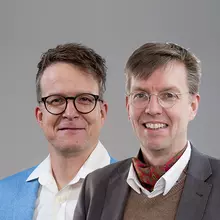
Pascal Daleiden
Position: Chairman of the Executive Board
- Department: Country Managing Director DACH
- Company: Hitachi Energy Germany AG
Flexibility and decentralised storage are decisive pieces of the jigsaw puzzle when it comes to the future of electrical energy. A coherent overall picture, however, can only emerge if the macro level also plays along: We need a smart grid that is capable of safely accommodating these dynamic feed-ins, controlling load flows and transmitting energy over long distances. Hitachi Energy is convinced that without the expansion of these transmission grids, the entire transition will come to a standstill. For this issue of tec.news, we spoke to Pascal Daleiden, CEO of Hitachi Energy Germany AG and the company’s head of operations for Austria, Germany, Slovenia and Switzerland about the hidden magic of complex infrastructures, the dynamic, rapid transformation driven by AI data centres, and his view on why electrification, digitalisation and automation must inextricably mesh and merge to create a resilient overall system.
Energy as Magic
tec.news: Mr Daleiden, in the 1970s cult series Catweazle, a medieval magician marvels at the modern world and views humanity’s control over electricity as veritable magic. He calls it “Elec-trickery”.
When we look at modern energy systems today: What role does this “Elec-trickery” play in your professional life?
Pascal Daleiden: Although I must admit that I’m not familiar with the series itself, the term fits impeccably. For me, “Elec-trickery” stands for all those highly complex technical processes that take place behind the scenes and which the general public is often completely unaware of. The generation, transmission and distribution of electricity are constantly interlinked to ensure that industry, infrastructure and private households are supplied with a reliable supply of electricity at virtually all times. What is particularly fascinating is just how fundamentally this system has changed. In the past, the energy supply was organised centrally, with a single power station supplying an entire region. Nowadays, we are increasingly generating electricity locally by way of renewable energy sources. As a result, electricity must be transmitted over much greater distances and managed with considerably greater flexibility. So today, the real magic is in managing a tremendously complex, decentralised and dynamic energy system in such a way that supply security, efficiency and resilience are all guaranteed over the long term.
Electrification meets Digitalisation
tec.news: Doesn’t that also mean that electrification and digitalisation actually go hand in hand these days?
Pascal Daleiden: I definitely agree, from my point of view, there are hardly any electrification measures left that do not also involve digitalisation. Systems and products are becoming increasingly intelligent due to the fact that they are being equipped with sensors, interfaces and communication capabilities. This applies to heat pumps in buildings just as much as it does to the huge transformers in the electricity grid. The data generated in this process helps, for example, with the implementation of predictive maintenance, improved capacity utilisation and more precise control functionalities. In future, a decentralised and volatile energy system can only be operated in a stable and efficient manner with the aid of digital technology and semi-automated control mechanisms. The complexity of this task would otherwise be simply unmanageable.
Drivers of Electrification
tec.news: Which specific drivers of electrification do you currently experience most strongly in your working environment?
Pascal Daleiden: The industrial arena is a huge driving force, which is transforming its energy-intensive processes. The electrification of blast furnaces in the steel industry, or local hydrogen generation are specific examples in this context. Projects of this kind require extremely high performing and well-integrated electrical systems. Data centres and artificial intelligence are further drivers of growth. These applications create tremendous additional demands for a fail-safe infrastructure. After all, we mustn’t forget: While traditional data centres represent a relatively constant load on the grids, the new AI data centres are highly volatile consumers. This presents new challenges for power quality and system stability. That is why we at Hitachi Energy say: “No transition without transmission”. The energy and industrial transition can only succeed if the expansion of the grid proceeds at a high level and on a continuous basis. We must not put the brakes on and leave the next generation with the burden of having to catch up.
System stability & Automation
tec.news: You’ve just mentioned system stability. How exactly does automation come into play here, alongside digitalisation?
Pascal Daleiden: All three areas – electrification, digitalisation and automation – can only realise their full potential when working together. With the phasing out of conventional power stations, meaning gas, coal and nuclear power, we are losing our large-scale power generators. Thanks to their physical inertia, their rotating masses have so far dampened fluctuations in the grid and provided reactive power, which is essential for voltage stability in the grid. Renewable energy plants, such as wind and solar, feed their electricity into the grid by way of power electronics – they have none of these rotating mechanical components at all. That is why we now have to maintain this grid stability artificially. Manual grid control by human operators, however, is no longer sufficient to enable a response to grid changes within milliseconds in future. We need automation and AI that can anticipate problems and suggest specific solutions to control centre staff. Moreover, we are also introducing new automated equipment into the network.
Automated Equipment
tec.news: Which equipment are you referring to specifically?
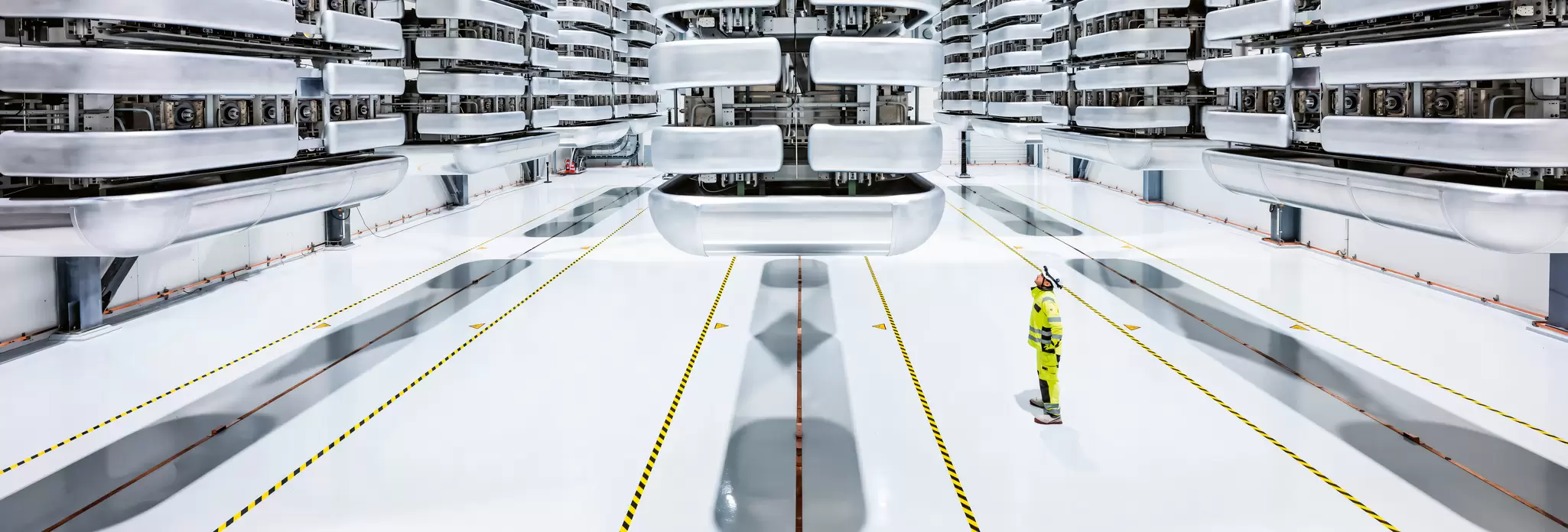
Pascal Daleiden: I am thinking, for example, of so-called Enhanced STATCOM systems. These are advanced, leading edge compensation systems which supply reactive power and – when fitted with supercapacitors – can even provide active power for short periods to stabilise the grid. Another key component is high-voltage direct current transmission – HVDC for short – which is used, for example, on the major north-south transmission lines in Germany or in interconnectors. Power electronics play a vital role here. Semiconductors and power electronics are the foundation that makes so much of what we see in network automation possible in the first place. This ranges from the converters in the power lines, to railway technology and all the way through to the charging infrastructure for electric cars.
"Always On" in the Electricity Grid
tec.news: In industry today, the term “always on” is often encountered. The systems are always accessible and on standby.
What does this mean for the electricity grid, and how do you deal with the existing structures into which you need to integrate new solutions?
Pascal Daleiden: Within the context of the electricity grid, “always on” quite simply means constant availability. It’s not a case of “flip the switch and the power goes off”. Systems designed primarily to provide redundancy and resilience are always running or on standby. In actual practice, electrification rarely takes place on a proverbial greenfield site. In existing substations – classic brownfield sites – space is extremely limited and at a premium, meaning that we need to fit more power into the same space. The switch from traditional air-insulated switchgear to gas-insulated switchgear is one technological solution to this very space problem – and are considerably more compact. This means that valuable space suddenly becomes available on the existing site, allowing, for example, a second substation to be built right next to the existing substation in order to meet the increased power demand.
Technology vs. Regulation
tec.news: Are we currently lacking technical solutions or organisational framework conditions enabling us to keep the pace with electrification?
Pascal Daleiden: Technically speaking, most solutions are already in place or at an advanced stage of development. There are no technical reasons why electrification should not be driven forward at the necessary pace. The greatest challenges are actually encountered in the organisational and regulatory areas. Approval procedures and onerous regulatory conditions can delay projects. Although there have been some noticeable improvements recently thanks to the laws of acceleration, we still need to adapt the regulatory framework even more closely to the new challenges, such as system stability. Companies like ours need certainty when it comes to long-term planning. We are investing nine billion US dollars globally in building up capacities, expanding our plants and recruiting staff. For all this to happen, the right general framework conditions must be in place.
Interoperability & Connectivity
tec.news: In concluding, let’s take a look at the hardware level:
Electrification and connectivity are closely linked – both in terms of energy and data. What demands and requirements does this place on interfaces and connectors?
Pascal Daleiden: Interoperability is the absolute key requirement, closely followed by cybersecurity. In an increasingly interconnected energy system, components and interfaces must communicate with one another with total reliability. Take large HVDC systems with multiple terminals: When we connect cables and converters from different manufacturers here, we must carry out extremely thorough testing in advance to ensure that they are interoperable and operate safely. There have long been established standards for this in industry, and in the field of high-voltage grids, manufacturers’ groups are working intensively on these issues within interoperability committees. More data and reliable connectivity help us to understand the network better and operate it in a more resilient manner. That is why, for me, connectivity is not just a matter of technical interfaces, but a crucial enabler for stable, future-proof electricity grids.