Taking electrification a step further: intelligence integrated in the flow of energy


Andreas Huhmann
Position: Strategy Consultant
- Department: C+N Strategy
- Company: HARTING Stiftung & Co. KG

Dr. Stephan Middelkamp
Position: General Manager Quality & Technologies
- Department: SSU QT
- Company: HARTING Stiftung & Co. KG
When Werner von Siemens presented the electric generator to the Berlin Academy of Sciences on 17 January 1867, he concluded with the words: “Technology currently has the means to generate electric currents of unlimited power, cheaply and conveniently, wherever labour is available.” 1) Until then, electricity had primarily been a medium of information: the weak currents from batteries were sufficient for telegraphic signals. Siemens’ invention made it possible to generate high-voltage current in huge quantities.
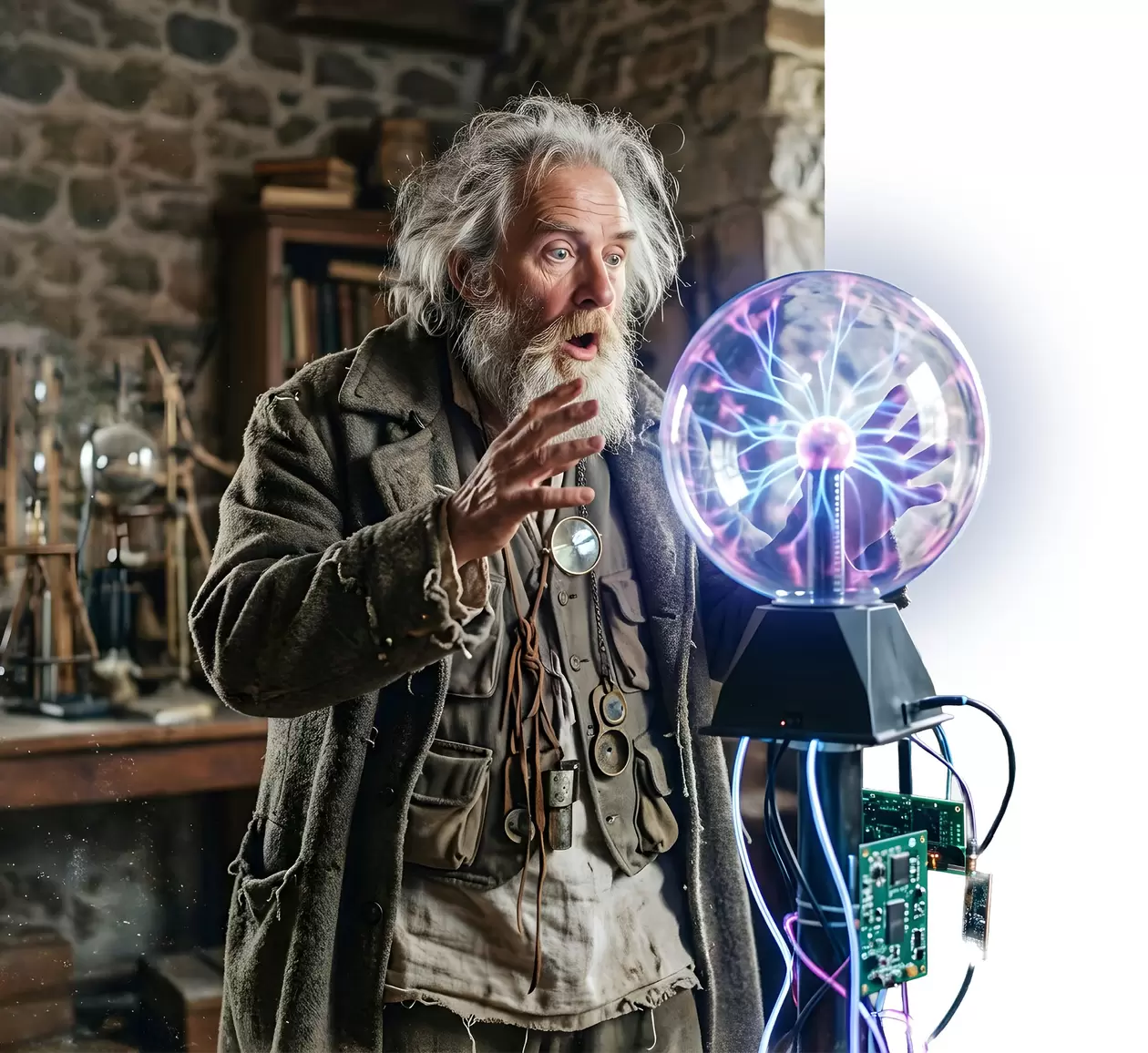
What was once merely a means of signal transmission has become an universal energy form. It marked the start of physical electrification and the beginning of a division that was to last for centuries: Communications technology (data) on the one hand, and energy technology (power) on the other.
Today, more than 150 years later, electrification is taken for granted, as a matter of course; electrical energy is ubiquitous, and its generation and consumption must be kept in balance. This is precisely where the next challenge arises, because the world of electricity – where one entity generates power and many consume energy – has long since come to an end.
How do we manage this gigantic, decentralised force? When millions of machines and energy networks are constantly interacting, the physical supply alone is no longer sufficient. The flow of energy must become intelligent. This is where the historical division ends: Communication technology and energy technology are converging. Power and data are becoming indivisible.
1) Werner von Siemens: On the conversion of mechanical energy into electrical energy without the use of permanent magnets. 1867. 58. Available online at:
Systems rather than sectors: Energy needs connection
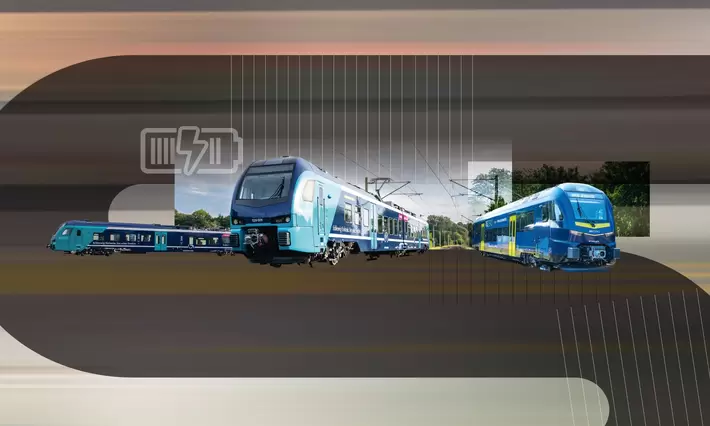
This ongoing convergence of energy and data forms the foundation of the All-Electric Society. And that is by no means just a futuristic dream anymore: Whether in the electrified rail sector, in mechanical engineering or on ships fitted with container-sized battery storage systems – the transformation is well under way.
Electrification, however, does not realise its full potential as an isolated factor, but rather as part of a “triangle of impact” alongside digitalisation and automation. Only in this way can fluctuating renewable feed-in be actively balanced by controllable consumers and storage systems. Viewed in this context, sector coupling is less of a technical hurdle than a mental barrier. From a digital perspective, these sectors have long been interconnected; what actually separates them are entrenched ways of thinking. Consequently, genuine sector coupling begins with breaking down these mental silos. In straight forward practical terms, the aim is to integrate individual machines from different sectors. This is how new value is created. Take, for example, a scenario when consumer drones are used in conjunction with energy infrastructure control systems for precision fertilisation in agriculture – which is the result of such integration.
elec-trickery: When electricity starts thinking
Within this triangle, artificial intelligence equips the systems with a new capability. Automation has made processes manageable, digitalisation has made them visible. And now, AI is making them truly manageable for the first time.
Catweazle, the wizard from the 1970s cult series, reverently referred to electricity as “elec-trickery”, and the trick wasn’t the electric light itself but the switching on of the electric light – that was the trick.
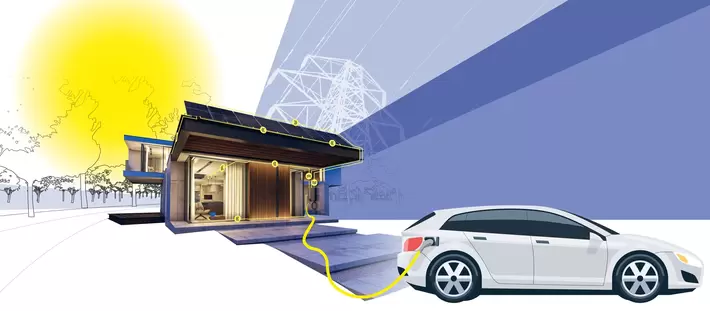
In the age of AI, the word takes on a new meaning: Electricity is flowing, but in future it will be AI that helps ensure it is available in the right place and at the right time. While a smart electricity meter knows the price, only a machine-learning system can independently decide when it is cheaper to charge the home battery or to let the electric car feed electricity back into the grid.
Brownfield: The reality of the evolved world
The world is always a brownfield; a greenfield is a chimera, because everything takes time, and in every development process, a greenfield inevitably becomes a brownfield. This diversity is also the result of an infrastructure that has developed over more than 100 years. Electrification is always carried out on brownfield sites, ensuring that new technologies can be successfully integrated without jeopardising ongoing operations.
Here the digital twin is proving to be a crucial tool. Through digitalisation, it enables the physical asset to be automated by way of its digital replica. While AI is increasingly translating between different communication protocols, the connectivity itself must be firmly in place. At the data level, additional structuring is called for: As Andreas Wedel demonstrates in this issue, the digital twin is becoming the central data anchor throughout an asset’s entire life cycle. So here addressing the “triad” of the All-Electric Society, namely electrification, digitalisation and automation.
At the same time, the focus is shifting to a system’s life cycle. In future, electrical systems must feature modular design, be repairable and expandable. The digital twin makes it possible to replace individual faulty components in a targeted manner, rather than replacing entire systems. Modularity opens up opportunities. As Prof. Dr.-Ing. Eva Schwenzfeier-Hellkamp demonstrates, the circular economy is also becoming increasingly imperative in this context. This trend is also reflected in the energy supply: Centralised generation is giving way to local microgrids. Businesses are becoming producers, consumers and storage providers. In order to ensure the stability of these local systems, highly flexible storage solutions are required: As Reverion explains in this issue of our magazine, reversible energy systems can convert electricity into gas, thereby helping to bridge local periods of low wind and low sunlight.
Two currents, one cable: Connectivity as a cross-functional role
Whether in a local microgrid or when exchanging data for the digital twin: As electrification and digitalisation are merging and meshing, energy and data are increasingly complementing one another to form a holistic physical infrastructure. What was once conceived as separate must grow together.
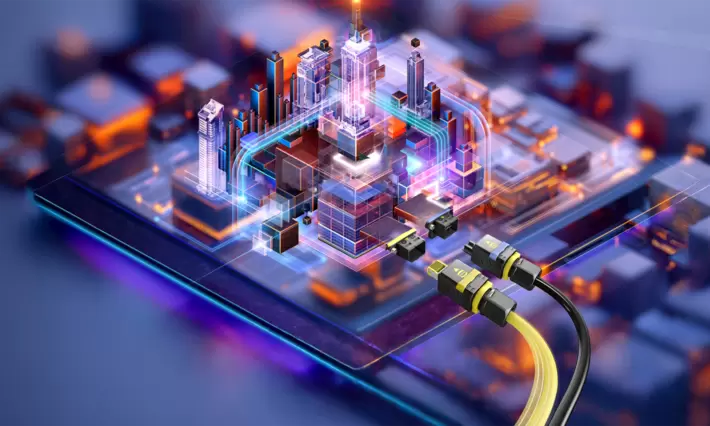
In this way, connectivity is emerging as a cross-sectoral function. The very same connector that is fitted in a machine today may well end up in a data centre tomorrow – while remaining unchanged in its core function of reliable transmission. That is why, today, connectivity must be conceived in both a smaller and a larger context at the same time. Smaller, more compact as an integrated, invisible function. Larger, as a critical infrastructure component that communicates and becomes part of the ecosystem.
One thing, however, remains constant: the detachable connection.
Connecting and disconnecting at the same time: In the apparent contradiction lies the strength of the connector, which is becoming increasingly essential as modularisation advances.
This marks the beginning of a fundamental change. While Werner von Siemens’s aim in 1867 was simply to unleash and harness currents of “unlimited strength” in the first place, the task today is to channel these energies in a targeted manner. As power and data become increasingly interwoven, the mere availability of energy is no longer sufficient. Adaptive energy management is becoming an essential prerequisite for balancing this decentralised complexity. And what is more, modern electrical systems must be considered over their entire life cycle. In the following pages, Prof. Dr.-Ing. Eva Schwenzfeier-Hellkamp explains exactly how these technological requirements give rise to a holistic, system-level task scope and challenge.